


[ad_1]
World eCommerce gross sales are anticipated to develop by 10.4% in 2023, with a projected income of over $6.51 trillion by the top of the yr.
This growth within the eCommerce market is spurred by the speedy adoption of on-line purchasing by clients in search of a extra private purchasing expertise – one thing eCommercee is nicely positioned to ship.
Actually, by the top of 2023, there’ll probably be greater than 24 million particular person eCommerce websites throughout the net. Whereas this implies there may be important potential for capital achieve there are additionally many threats on-line retailers can encounter.
This text discusses the important thing eCommerce safety threats going through distributors in 2023. We have a look at the potential harm which will be brought about, and methods firms can safeguard themselves towards these threats.

Phishing Assaults
Phishing assaults account for 1 in 5 knowledge breaches worldwide. They’re a sort of social engineering risk involving emails and messages despatched to people or clients, that look like from a legit sender however are, in truth, from cyber criminals.
These assaults goal to acquire delicate private info from eCommerce clients and employees, primarily bank card and fee particulars or usernames and passwords.
To cut back publicity to phishing assault threats, eCommerce companies ought to educate their staff and clients about recognizing and avoiding phishing emails and messages. This consists of options as e-mail authentication, coaching classes, in addition to reminders to by no means share delicate info.
One other efficient prevention measure is implementing multi-factor authentication, which requires eCommerce platform customers to supply a second verification step past only a password. This could embrace one thing the consumer is aware of (equivalent to a PIN), one thing the consumer has (equivalent to a safety token), or one thing the consumer is (equivalent to a biometric identifier).
Anti-phishing software program may detect and block phishing emails and messages earlier than they attain their meant targets.
Fee Fraud
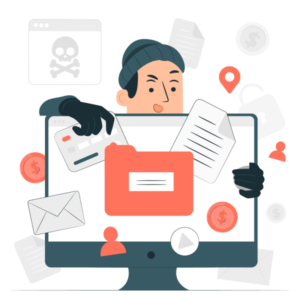
Fee fraud is predicted to price on-line companies greater than $200 billion in 2023. The risk happens when an unauthorized particular person performs transactions with stolen fee info, normally by stolen bank card particulars, id theft, or chargeback fraud.
Not like phishing assaults, which usually goal the eCommerce buyer’s financial institution, fee fraud threats deal with a fee platform.
Stopping fee fraud is extra of a technical and procedural course of when in comparison with the education-based prevention of phishing and different social engineering threats.
Particularly, eCommerce companies ought to use safe fee gateways that encrypt and defend delicate buyer knowledge and will implement processes that determine buyer info earlier than any transaction is finalized. Lastly, fraud detection software program that may alert companies to doubtlessly fraudulent transactions might help firms scale back their publicity to fee fraud threats.
Company Account Take Over (CATO)
One other massively expensive kind of fraud risk going through eCommerce companies in 2023 is Company Account Take Over (CATO) threats.
Any such fraud entails getting access to an organization’s monetary accounts and stealing cash or different belongings. These assaults sometimes depend on compromising the credentials of licensed customers or staff and utilizing these credentials to entry the corporate’s monetary programs. Preventative measures are the identical as stopping fee fraud assaults.
Malware and Ransomware
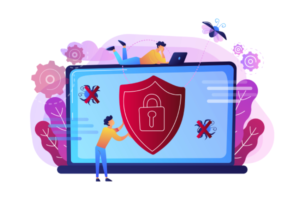
Malware and ransomware are varieties of malicious software program that pose important threats to eCommerce companies. The typical price of a ransom or malware assault is $1.85 million, making it a major risk to on-line sellers world wide.
Malware is any software program designed to hurt or exploit pc programs. On the identical time, ransomware is a wide range of malware that locks down a pc system and calls for a ransom in change for the discharge of that system.
Malware and ransomware can hurt eCommerce companies in a number of methods. They will steal delicate buyer info, intervene with enterprise operations by encrypting vital knowledge or freezing pc programs, and trigger oblique monetary loss as a result of system downtime or reputational harm.
To forestall malware and ransomware assaults, eCommerce companies ought to use antivirus software program and firewalls to guard their programs. It’s additionally very important that on-line retailers hold their software program updated, as many assaults exploit vulnerabilities in outdated software program. Corporations must also keep away from suspicious emails and downloads, as these can usually comprise malware or ransomware.
One other efficient prevention measure is to commonly again up vital knowledge and recordsdata in order that within the occasion of an assault, the enterprise can restore its programs with out having to pay a ransom. Training and employees coaching on figuring out and reporting suspicious exercise and implementing entry controls to restrict the influence of an assault are additionally really helpful preventative strategies.

Cross-Web site Scripting (XSS) Assaults
Like malware and ransomware, cross-site scripting (XSS) threats are software program/application-based. They work by injecting malicious code into an internet site, which will be executed in a sufferer’s browser after they go to the affected web page. This enables an attacker to steal delicate info, equivalent to usernames and passwords, or to govern the content material of the web site.
Clickjacking
A typical number of XSS assaults is “clickjacking,” the place the code injected into an internet site hides a malicious hyperlink or button close to an interactive web site aspect – equivalent to a button – which the web site consumer by chance clicks when partaking with the content material.
To forestall XSS assaults, eCommerce companies can validate consumer enter, sanitize web site content material, and keep away from malicious code injection. eCommerce This consists of implementing enter validation checks that guarantee consumer enter incorporates solely allowed characters and encoding particular characters to forestall them from being interpreted as code.
Utilizing internet utility firewalls (WAFs) is one other approach to mitigate XSS threats. WAFs examine incoming site visitors for pre-identified XSS assault patterns and block them earlier than they attain the web site. Moreover, eCommerce companies can conduct common vulnerability assessments and penetration testing to determine and repair any vulnerabilities of their internet functions.
Preserving internet functions updated with safety patches and updates can also be very important for stopping XSS assaults. Many assaults exploit vulnerabilities in outdated software program, so staying present with safety updates can considerably scale back the chance of an assault.

Insider Threats
Insider threats are a sort of cyber risk that comes from inside a corporation or eCommerce enterprise.
They are often intentional, the place an worker intentionally steals delicate knowledge or damages pc programs, or unintentional, equivalent to an worker inadvertently exposing confidential info (like in phishing threats).
Actually, disgruntled staff who voluntarily or involuntarily go away a corporation pose one of the vital important safety dangers to eCommerce companies, as these people can maliciously steal and share delicate info out of spite.
Due to this fact, having strict entry management, which limits worker entry to info and programs, is important throughout all departments and ranges inside any group or eCommerce enterprise. This could embrace utilizing role-based entry controls that restrict entry to solely these staff who want it and implementing two-factor authentication to forestall unauthorized entry.
Monitoring worker exercise is one other efficient prevention measure, as it will possibly assist detect and forestall suspicious exercise earlier than it turns into an issue. This may embrace recording community exercise and consumer habits, in addition to implementing safety info and occasion administration (SIEM) instruments that may detect anomalies and alert safety groups.
As with different social engineering assaults, educating staff on knowledge dealing with is important to mitigate an eCommerce enterprise’s publicity to insider threats. This consists of encouraging staff to report suspicious habits or exercise and use correct password hygiene greatest practices.
Distributed Denial-of-Service (DDoS) Assaults
Distributed Denial-of-Service (DDoS) threats are a sort of cyberattack that disrupt an internet site’s or on-line service’s availability by overwhelming it with site visitors from a number of sources. They’re extremely prevalent, with one survey reporting almost 70% of organizations expertise a number of DDoS assaults every month.
DDoS assaults are launched with networks of compromised gadgets, equivalent to Web of Issues gadgets, that are compromised and manipulated by a hacker. They’re significantly dangerous to eCommerce companies, as they disrupt web site availability, which causes lack of income, and damages buyer loyalty.
To forestall DDoS assaults,eCommerce companies can use a content material supply community (CDN) to distribute web site site visitors throughout a number of servers and knowledge facilities. Within the occasion of a DDoS assault, a CDN community helps soak up and distribute the excessive quantity of site visitors by sending it to a number of remoted places, thus stopping an overload of the web site or service.
Monitoring community site visitors is one other efficient prevention measure, as it will possibly assist detect and mitigate DDoS assaults in actual time. Monitoring measures embrace implementing site visitors evaluation instruments that may detect uncommon site visitors patterns and block site visitors from suspicious sources.
DDoS safety software program can also be out there to eCommerce companies which may deal with DDoS assaults earlier than they compromise web site performance. These companies embrace options like site visitors filtering, load balancing, and computerized scaling and will be custom-made to the enterprise’s particular wants.
Social Engineering Assaults
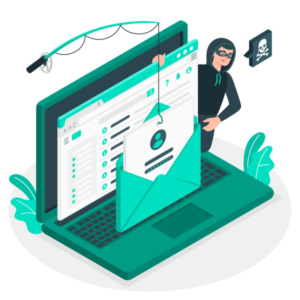
Social engineering assaults are an umbrella time period that defines any cyberattack achieved by manipulating human habits to acquire delicate info or entry pc programs. They take many types, together with phishing scams, pretexting, baiting, and quid professional quo assaults, and depend on the sufferer’s belief or feelings to achieve success.
As these assaults play on human nature and habits, decreasing an eCommerce enterprise’ publicity to social engineering threats revolves round worker and buyer schooling.
As talked about within the phishing assault part above, this technique consists of offering thorough inside coaching on easy methods to acknowledge suspicious emails or cellphone calls and sustaining worker and organizational vigilance to by no means share delicate (info until they’ll confirm the requestor’s id – which is one other efficient methodology for decreasing publicity to social engineering assaults).
On-line companies considerably enhance their probabilities of thwarting a social engineering assault when requiring clients and staff to supply extra info or documentation to confirm their id earlier than granting entry to delicate info or programs.
Restricted entry to delicate info is one other efficient prevention measure. By limiting entry to tiers of inside knowledge on a need-to-know foundation, eCommerce companies can scale back the chance of social engineering assaults by reducing the variety of staff with entry to delicate info.
The Takeaway
In 2023, eCommerce companies needs to be looking out for a number of essential threats, together with social engineering threats, fraud, and software program/utility threats.
As using on-line purchasing and digital funds continues to develop, cybercriminals and their skillsets turn out to be more and more subtle in exploiting vulnerabilities in digital programs.
It’s essential for companies to prioritize eCommerce safety to guard their clients’ private and monetary info and preserve their popularity. The alternate situation? Safety breaches will inevitably result in important monetary and reputational harm, straight leading to misplaced clients and income.
By studying in regards to the varieties of threats and easy methods to defend their companies from them, eCommerce firms can scale back their publicity and the danger of falling sufferer to cybersecurity assaults in 2023.
Creator Bio

Irina Maltseva is a Progress Lead at Aura and a Founder at ONSAAS. For the final seven years, she has been serving to SaaS firms to develop their income with inbound advertising. At her earlier firm, Hunter, Irina helped 3M entrepreneurs to construct enterprise connections that matter. Now, at Aura, Irina is engaged on her mission to create a safer web for everybody. To get in contact, comply with her on LinkedIn.
[ad_2]

