



[ad_1]
Google makes use of structured information to raised perceive what a webpage is about by classifying the subject, figuring out necessary elements of the webpages like logos and photos, and displaying webpages prominently on the prime of the web page.
There are a number of sorts of structured information, however solely certainly one of them is most well-liked by Google, so it’s necessary to make use of the fitting format.
Which Sorts Of Structured Knowledge Does Google Assist?
Google helps three sorts of structured information:
- JSON-LD.
- Microdata.
- RDFa.
Every of these requirements is a special manner of speaking structured information and is specified on the official Schema.org web site.
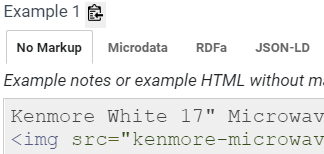 Screenshot by creator, Might 2022
Within the picture above, it may be seen that the Schema.org structured information instance gives examples in three codecs.
There are three tabs. Every tab corresponds to a special type of structured information: Microdata, RDFa, and JSON-LD structured information.
What Is Microdata Structured Knowledge?
Microdata is a manner so as to add metadata inside the HTML code and is part of the HTML specification, often known as the WHATWG (Internet Hypertext Utility Know-how Working Group) HTML commonplace.
Microdata is an HTML specification for marking up a webpage inside the HTML itself.
It’s basically metadata that’s positioned inside the HTML code that’s printed inside the <physique> tags and is readable by machines like Googlebot.
Schema.org, the non-profit group that creates the structured information specs, printed a structured information explainer referred to as Getting Began and used Microdata in all of their examples.
So, Microdata remains to be a legitimate strategy to talk structured information and is at the moment supported by the Schema.org standards-making physique in addition to by Google (besides in particular instances the place it’s explicitly not supported).
The microdata is nested inside current HTML like this:
<physique itemscope itemtype="https://schema.org/WebPage"> <div itemprop="breadcrumb"> <a href="https://www.searchenginejournal.com/structured-data-google-prefers/451847/class/books.html">Books</a> <a href="class/books-literature.html">Literature & Fiction</a> > <a href="class/books-classics">Classics</a> </div>
Within the above code, the microdata referred to as, “itemprop” is inserted to specify the structured information Property, on this case, the breadcrumb structured information property.
That is what that code seems to be like with out the microdata structured information:
<div>
<a href=”class/books.html”>Books</a>
<a href=”class/books-literature.html”>Literature & Fiction</a>
<a href=”class/books-classics”>Classics</a>
</div>
There are different methods of doing the identical factor by utilizing the BreadcrumbList structured information sort as effectively.
What Is RDFa Structured Knowledge?
RDFa is an acronym for Useful resource Description Framework in attributes. It’s an extension of HTML.
The rationale it’s referred to as an extension of HTML is that it extends HTML.
Google describes RDFa like this:
“Microformats specify each a syntax for together with structured information into HTML paperwork and set of microformat courses every with its personal particular vocabulary of allowed attributes.
RDFa, alternatively, specifies solely a syntax and permits you to use current vocabularies of attributes or create your personal.
It even helps you to mix a number of vocabularies freely. If the present vocabularies don’t meet your wants, you’ll be able to outline your personal requirements and vocabularies by creating new fields.”
RDFa affords a further manner of speaking structured information to Google that’s much less intrusive to the code than the microdata methodology.
Like microdata, RDFa is at the moment specified as a legitimate type of information by Schema.org and is at the moment supported by Google (besides when explicitly not specified).
That is what a breadcrumb structured information can seem like within the RDFa format:
<physique itemscope itemtype=”https://schema.org/WebPage”>
<div itemprop=”breadcrumb”>
<a href=”class/books.html”>Books</a> >
<a href=”class/books-literature.html”>Literature & Fiction</a> >
<a href=”class/books-classics”>Classics</a>
</div>
What Is JSON-LD?
JSON-LD is a scripting language that enables publishers to speak necessary info to search engines like google and yahoo.
JSON-LD is an acronym for JavaScript Object Notation for Linked Knowledge.
As a result of it’s a script, it’s comparatively simpler to make use of than Microdata and RDFa as a result of JSON-LD will not be embedded inside the HTML as metadata or as an extension of the HTML itself.
JSON-LD will be positioned wherever on a webpage, even within the Head part of the webpage code which is the place metadata normally goes.
JSON-LD may also be positioned on the finish of the code or inside the content material part of the code (it won’t be seen to web site guests).
One other good thing about JSON-LD is that, as a result of it’s separated from the HTML and exists inside its personal script, it may be simply edited and reviewed.
A breadcrumb checklist structured information markup can seem like this:
 <script sort="software/ld+json">
{
"@context": "https://schema.org",
"@sort": "BreadcrumbList",
"itemListElement": [{
"@type": "ListItem",
"position": 1,
"name": "Widgets",
"item": "https://example.com/widgets"
},{
"@type": "ListItem",
"position": 2,
"name": "Blue Widgets",
"item": "https://example.com/widgets/blue-widgets"
},{
"@type": "ListItem",
"position": 3,
"name": "Reviews"
}]
}
</script>
Troubleshooting a script that’s utterly separated from the HTML is a lot simpler than making an attempt to code the structured information inside the HTML, which is how Microdata and RDFa are carried out.
Based on the official JSON-LD web site:
“Knowledge is messy and disconnected. JSON-LD organizes and connects it, creating a greater Internet.
It’s a strategy to create a community of standards-based, machine-readable information throughout Internet sites.”
JSON-LD scripts will be added to a webpage in a way that may be templated inside a web site, making it simple so as to add, replace, and take away.
The official Schema.org structured information specification will be discovered at Schema.org (shock!).
Which Kind Of Structured Knowledge Does Google Want?
Despite the fact that Microdata continues to be supported by the Schema.org standards-making group, what issues is the model that Google helps.
In a Google Workplace-hours hangout from March 2019, a participant requested the next query:
“What sort of Schema markup is preferable for Google? Ought to I take advantage of Jason or… microformats? Which format is preferable?”
John Mueller answered:
“We at the moment choose JSON-LD markup. I feel many of the new structured information which might be type of come out for JSON-LD first. In order that’s what we choose.”
Google Prefers JSON-LD Structured Knowledge
Google’s John Mueller made it clear that Google most well-liked JSON-LD structured information.
A good thing about JSON-LD structured information is that it’s non-intrusive.
It’s non-intrusive as a result of it retains structured information separate from the HTML code.
That makes studying, troubleshooting, and updating structured information a lot simpler as a result of it’s extra easy to implement and preserve.
Moreover, the JSON-LD scripting language follows a set of simply discovered guidelines and might simply be added or faraway from a web site.
How To Implement JSON-LD Structured Knowledge
The official Schema.org JSON-LD structured information Schema.org web site has many examples of how one can write the structured information code. Simply take an instance and use it as a template.
Right here’s a picture of an instance with out structured information:
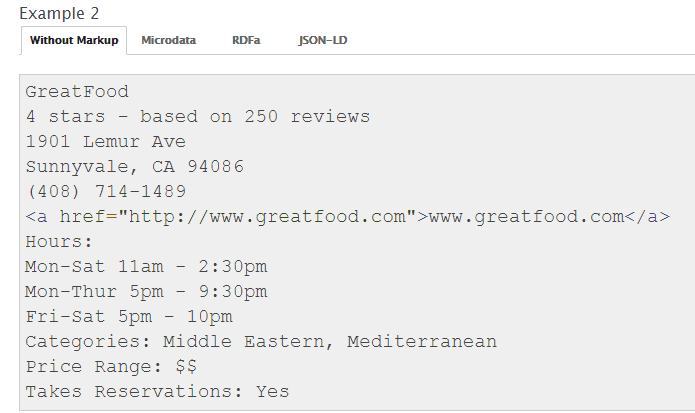 Screenshot by creator, Might 2022
That is an instance of the very same content material expressed as JSON-LD Schema.org structured information:
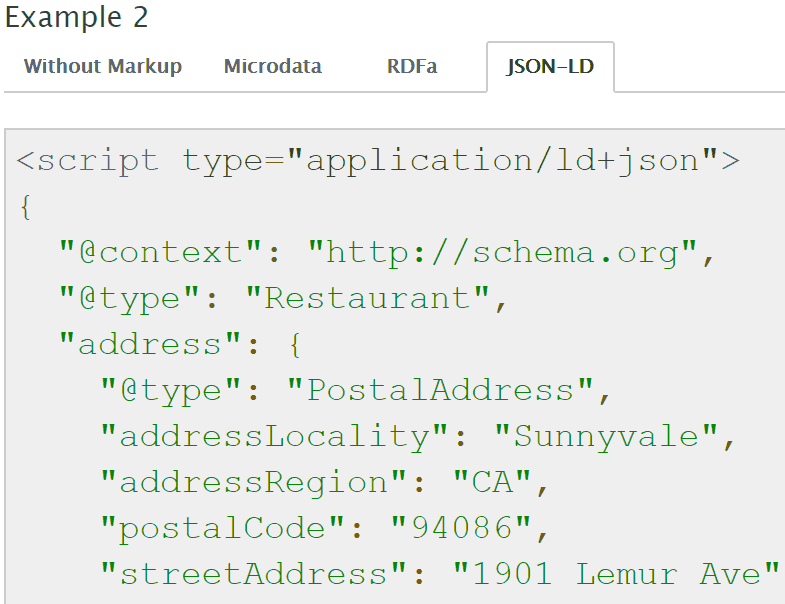 Screenshot by creator, Might 2022
Google Prefers JSON-LD Structured Knowledge
Google’s most well-liked format for structured information is JSON-LD.
As a result of that’s Google’s choice, it’s a good suggestion to ensure that all structured information used inside a webpage is utilizing JSON-LD and never the JSON-LD construction.
Watch the Google Webmaster Workplace-hours hangout on the 22:33 minute mark:
Extra Assets:
Featured Picture: Helder Almeida/Shutterstock
[ad_2]

