


[ad_1]
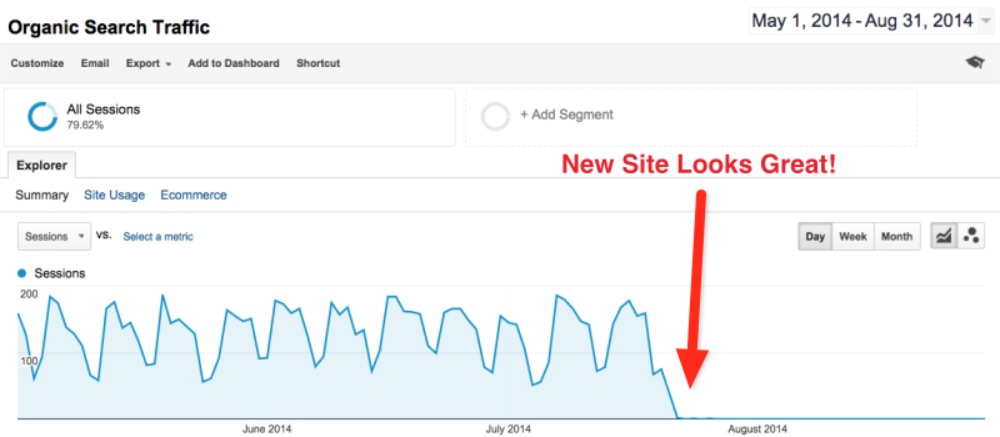
With the rollout of Google’s new Useful Content material Replace, it’s possible there can be some volatility in rankings and site visitors over the approaching weeks. With that in thoughts, we thought it could helpful to kick off our search engine optimization publication with a number of hacks we’ve picked as much as rapidly diagnose a site visitors drop.
We’ll cowl 7 alternative ways you may determine why your site visitors dropped and present you how one can monitor and mitigate site visitors drops sooner or later.
More often than not natural site visitors drops for certainly one of these seven causes:
- Redesign and rebranding
- Updating an internet site with out search engine optimization oversight
- Content material updates
- Altering the structure of the location
- Area migrations
- Google algorithm replace
- Technical points
As a place to begin for investigating drops, it’s greatest to determine what’s modified in your website. Listed here are a few hacks that may enable you to decide why your site visitors shifted.
7 Hacks for Diagnosing Visitors Drops
- Use your GSC protection report to identify developments
- Use your GSC protection report back to test for URL bloat
- Use GSC web page expertise, Core Net Vitals, and crawl stats Stories
- Examine Bing and Google site visitors
- Use Archive.org to seek out adjustments
- Crawl the web site
- Use automated tagging
If there are any annotations in Google Analytics (GA) or launch notes that’s going to actually assist determine what’s modified however, usually there aren’t so we’ve to get artistic.
1. Use Your GSC Protection Report back to Spot Developments
One fast approach to suss out what’s occurring is to move to Google Search Console (GSC) and test the protection experiences.

Check out the graphs on the best aspect and notice any patterns. Which graphs are going up or down?
For instance, one this report, we are able to see a big improve within the variety of noindex pages. So subsequent, we’d ask, “does this correlate with the lower in site visitors?” Maybe this website just lately noindexed a bunch of pages accidentally.
2. Use Your GSC Protection Report back to Examine for URL Bloat
A Google Search Console protection report may present you points like URL bloat. URL bloat is if you add a major variety of web site pages which have redundant or low-quality content material making it harder on your personal precedence pages to get a excessive rating.

The graph above reveals an instance of a website that launched over 100,000s URLs up to now few months. This led to a steep dip within the impressions they had been beforehand rating for.
So, we don’t have a definitive reply right here nevertheless it does provide you with an thought of what deserves extra investigation as a result of we are able to see the connection between the rise in noindex URLs and decreased impressions.
It’s potential that Google was not indexing their just lately added pages as a result of they had been redundant or skinny. It’s additionally potential that this website might have been deliberately noindexing some pages and that triggered this drop.
3. GSC Web page Expertise, Core Net Vitals, and Crawl Stats Stories
Important efficiency adjustments can affect rating so it’s value checking these experiences:
- Core Net Vitals in Google Search Console

The Core Net Vitals report reveals how your pages carry out, based mostly on real-world utilization knowledge.
- Web page Expertise in Google Search Console

The Web page Expertise report gives a abstract of the person expertise of tourists to your website.
- Crawl Stats in Google Search Console

The Crawl Stats report reveals you statistics about Google’s crawling historical past in your web site.
Discover the orange line is that this Crawl stats report—that is the common response time. For readability, the common response time refers back to the common time Googlebot takes to obtain a full web page.
As common response time will increase the variety of URLs crawled goes down. This isn’t essentially a site visitors killer nevertheless it’s one thing you must contemplate as a possible trigger.

The crawl stats may assist detect points with internet hosting. This helps reply the place sure sub-domains of your website had issues just lately. For instance, they may very well be serving 500s or one other problem Google is reporting.
The good factor about GSC Web page Expertise, Core Net Vitals, and Crawl Stats experiences is that they solely take you a minute or two to evaluation. So, they’re an effective way to rapidly get a learn on the location and what issues might clarify the site visitors drop.
4. Examine Bing and Google Visitors
Here’s a fast approach to discover out in case you are liable for the drop or Google is: have a look at your Bing natural site visitors knowledge.

For those who see site visitors dropped on Google however not on Bing, then Google is probably going accountable.
For those who see no divergence and natural site visitors dipped on each Google and Bing, then it’s possible that you simply did one thing.
Good Information: When you find yourself accountable it’s a lot simpler to repair. You possibly can reverse engineer what you probably did and get your website rating once more.
Unhealthy Information: If Google is liable for the dip then you will must do some additional evaluation to determine what they modified and why it’s impacting you. This will take some massive knowledge options that we’ll get into within the final part.
5. Use Archive.org to Discover Adjustments
Archive.org will be actually helpful when you don’t hold documentation of historic website adjustments, which most don’t. In these circumstances, you should use Archive.org to see screenshots of each web page and template of the location from earlier than and after the site visitors drop.

One main profit is that Archive can return years in comparison with GSC which solely serves up the final 16 months of information.
6. Crawl the Web site
To search out technical issues you’ll need to do a crawl of the web site. You should use instruments like screaming frog or Sitebulb for this.
Crawling your website may also help you discover a host of technical points like damaged hyperlinks, nofollow navigation hyperlinks, search engine robots blocked in robots.txt, ect.
7. Use Automated Tagging
For those who aren’t utilizing automated tagging, you must. That is the most suitable choice when you might have a big website and/or must harness the facility of huge knowledge to slender down which key phrases and pages are liable for the dip in site visitors.
Automated tagging for classes, intent, and web page sort means that you can:
- Simply discover patterns in site visitors drops
- Higher perceive ongoing site visitors
- Retain data from previous analyses
- Make it simpler to foretell the affect of future search engine optimization initiatives
LSG’s current search engine optimization workplace hours lined this subject together with a step-by-step walkthrough of how we used automated tagging to find the reason for a nationally recognized eCommerce website. You possibly can try our recap weblog on automated tagging right here.
[Previously published on Local SEO Guide’s LinkedIn Newsletter – Page 1: SEO Research & Tips. If you’re looking for more SEO insight, subscribe to our LinkedIn newsletter to get hot takes, new SEO research, and a treasure trove of useful search content.]
[ad_2]

